9 November 2026
Glass vs polycarbonate glazing: telling roofs apart in satellite imagery
How glass and double-wall polycarbonate greenhouse roofs read differently in satellite imagery, and what actually resolves at 0.5–2 m GSD.
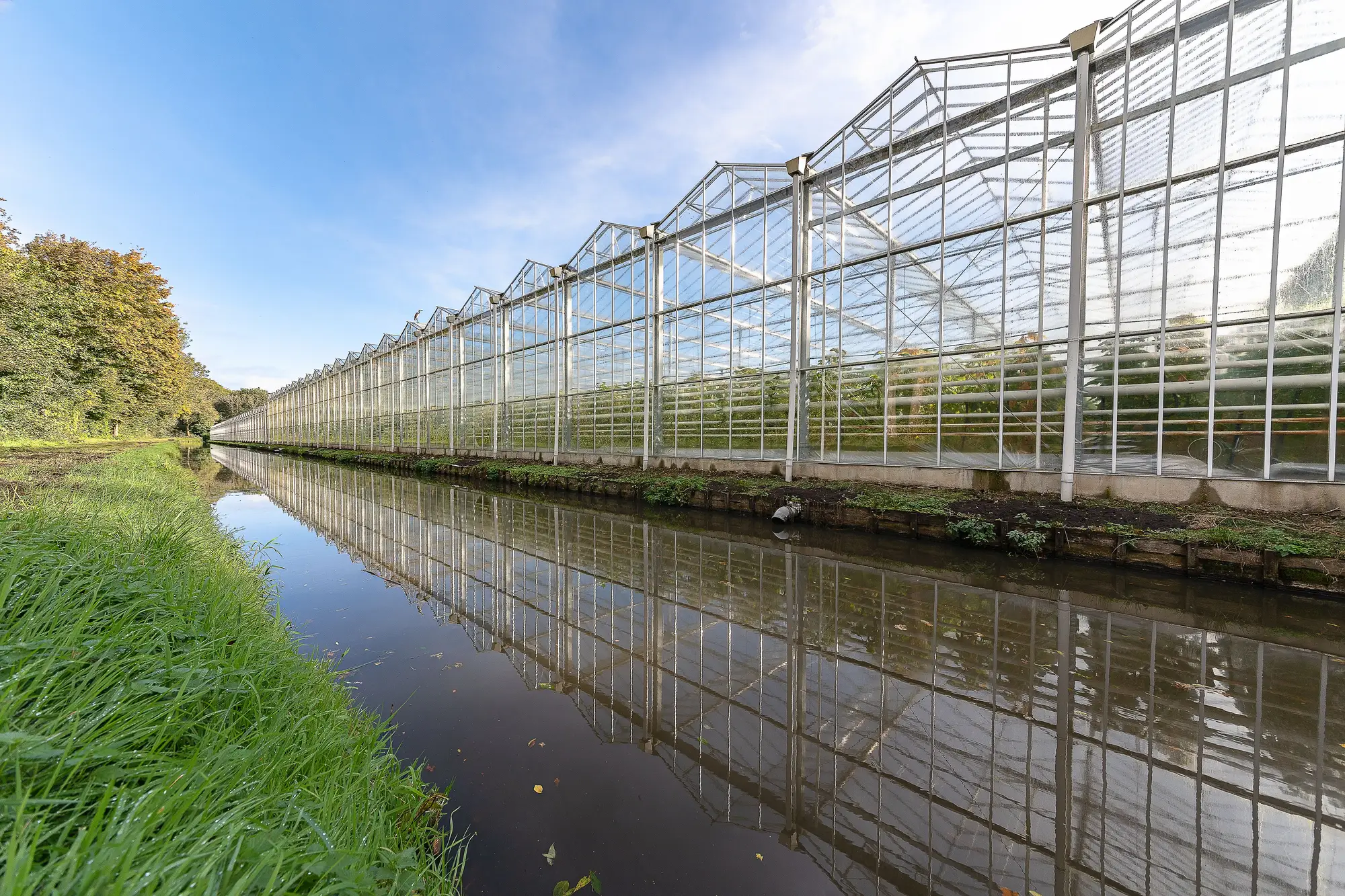
If you've ever walked a nursery row, you know the tell at ground level in half a second: the hard glint off a glass roof when the sun hits it square, versus the softer, almost waxy sheen off double-wall polycarbonate. From orbit you're looking down at a few pixels of the roof instead of standing under it. But the material still leaves a signature, just a different one than your eye is used to reading.
What actually resolves at 0.5–2 m
At high-res satellite GSD, individual glazing bars and panel seams don't resolve. A single glass pane or a polycarbonate sheet joint is smaller than a pixel, so you're not going to zoom in and count panels the way you might from a drone pass. What does resolve is the roof as a whole: its shape, its overall brightness, how that brightness changes bay to bay, and the shadow pattern the structure casts.
Glass roofs, especially Venlo-style ranges, are built on a repeating ridge-and-furrow profile, small gables running in parallel rows across the range. That saw-tooth geometry shows up at 0.5–2 m as a faint striping in the roof surface, and because glass is specular, each facet catches the sun differently depending on its pitch relative to the satellite's view angle. You'll often see alternating bright and dim stripes within a single range, sometimes with a few bays blown out white in the RGB bands where the glint lines up with the sensor.
Double-wall polycarbonate behaves differently. The material scatters light rather than reflecting it, so the roof tends to read flat and even, without the stripe-and-glint pattern glass produces. Polycarbonate ranges are also more often built as tunnels or gothic-arch vaults rather than ridge-and-furrow, so the shape itself, a continuous curved roof instead of a repeating saw-tooth, is frequently the stronger clue before you even get to reflectance.
The near-infrared band adds a second axis. Glass and polycarbonate transmit and reflect NIR differently than they do visible light, which separates the two material classes even when the RGB tone looks similar at a glance. That NIR contrast moves with sun angle, roof age and which pass the sensor caught the range on, so the strongest read comes from pairing it with the roof's shape rather than scoring it alone.
Shape and shadow usually beat color alone
If you're trying to sort a region's structures by glazing type from imagery, don't lead with brightness. Lead with the roof's geometry. A long, continuous barrel vault is almost always some form of film or polycarbonate. A repeating ridge-and-furrow saw-tooth, especially on larger commercial ranges, is the classic glass glasshouse roof profile. Color and glint are the confirming evidence, geometry is the first filter.
Age complicates the picture over time. Glass holds its reflectance for decades; it either breaks or it doesn't, and either way the glint signature stays fairly stable year to year. Polycarbonate yellows and hazes under UV exposure, so a ten-year-old double-wall polycarbonate roof often reads duller than a new one, while the glass range three fields over looks the same as it did when it was installed. For a planner tracking a region on an annual cadence, that drift is itself useful: a polycarbonate range that's visibly dulling is one that's approaching a re-glaze.
Why this matters for sizing a territory
None of this is academic if your job is sizing a protected-cropping territory rather than admiring the roofline. Glazing type correlates with crop mix, grower scale and the kind of climate control the structure can support, which in turn shapes what inputs and services that range is a candidate for. Knowing the split between glass and poly across a region, not just the total covered area, changes how you'd prioritize a territory.
That's the deliverable behind Greenhouse Mapping: a structure inventory for a region you define, with each building sized and classified by type, built fresh off each year's satellite pass. If sorting out glass from poly across a whole region is the problem in front of you, that inventory is worth a look.