2 November 2026
Greenhouse poly film replacement cycles and what they mean for demand planning
How long poly film lasts, what shortens the cycle, and why regional structure counts matter for annual film demand forecasts.
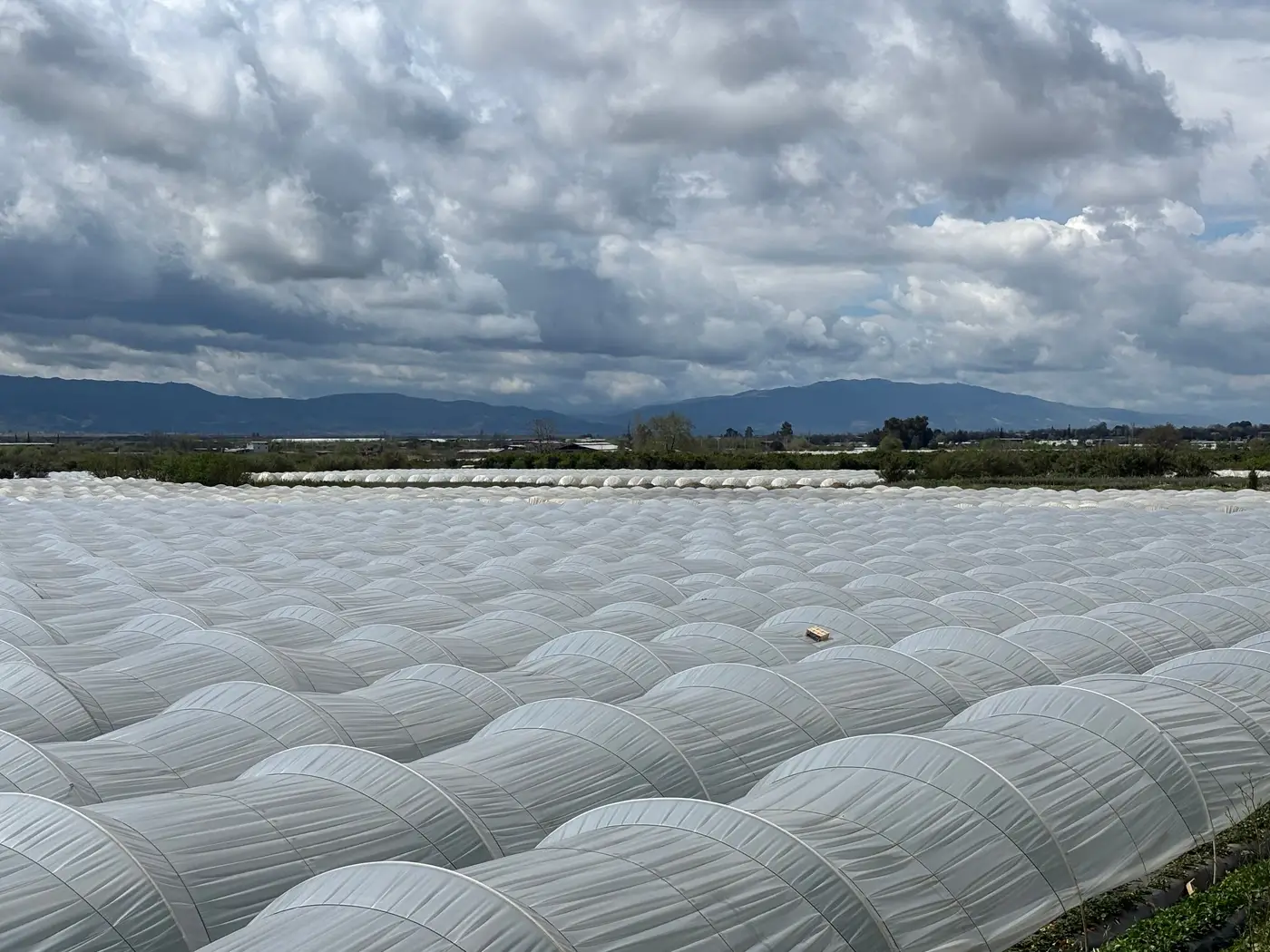
A grower doesn't replace poly film because a calendar says so. They replace it because the film has gone milky, the light transmission has dropped enough to show up in yield, or a hailstorm put a hole through a bay nobody wants to patch again. That makes the replacement cycle harder to pin down than most demand models assume, and it's the main reason territory-level poly film forecasts miss by wide margins.
The standard cycle, and why it slips
Most single-layer polyethylene greenhouse film is rated for three to four years of UV exposure before transmission loss and brittleness make it worth pulling. Multi-layer co-extruded films with better UV inhibitors push that toward five years, sometimes six in milder climates. Those are manufacturer numbers, and in the field they slip in both directions.
Film ages faster under high UV load, so a grower in a high-altitude or low-latitude region is closer to a three-year cycle regardless of what the roll said when it went up. Film also ages faster under mechanical stress: frequent high winds flex the sheeting at the batten points, and that fatigue shows up as tears long before the plastic itself has degraded. On the other end, a double-poly structure with an inflation blower protects the inner layer from direct wind load, which can stretch a replacement cycle past the rated life if the grower is managing cash flow rather than chasing peak transmission.
Hail and storm damage sit outside the normal cycle entirely. A single event can put a region's growers back in the market for film a year or two ahead of schedule, all at once, which is exactly the kind of demand spike a straight-line replacement model won't catch.
Why regional structure counts matter more than the average cycle
A film replacement cycle is a rate. To turn a rate into a demand number, you need the thing it's being applied to: how many square meters of plastic-covered structure actually exist in a region, broken out from the glass houses and shade structures that don't buy poly film at all.
That's the part most regional forecasts are weakest on. Dealer order history tells you what moved last season, and it misses what's standing in the ground now. It also skips the smaller operations that buy from whoever has stock that week rather than placing a standing order. Grower association membership lists undercount for the same reason. Field survey catches what's visible from the road and misses what's behind a windbreak or on the far side of a property.
Counted from above, every plastic structure in a territory shows up whether or not it's associated with a known buyer, sized by footprint rather than estimated by eye. Cross a film's expected life against that inventory, by structure age cohort where it's known and by rough vintage where it isn't, and a replacement-driven demand curve for the region starts to take shape instead of a guess extrapolated from last year's sales.
Building the demand number
A workable regional forecast needs three inputs: total covered area by structure type, since poly and glass don't compete for the same spend; a realistic film life for the local climate, not the manufacturer's lab number; and a sense of how much of that inventory is new versus aging, since a region that saw a building boom five years ago is about to hit a replacement wave all at the same time.
The first input is the one that's hardest to get right without flying a survey crew over the whole territory, which most input suppliers aren't set up to do every season. Greenhouse Mapping builds that structure inventory from satellite imagery instead, sized and classified by type across a whole region, refreshed annually so the aging curve for each year's cohort can be tracked year over year instead of assumed.
If your film demand forecast still starts with last year's shipments, it's worth seeing what the underlying structure count looks like first.