13 October 2026
What counts as protected cropping under crop insurance
How adjusters and planners define protected cropping and an insurable structure, and where greenhouses, tunnels, and shade houses land.
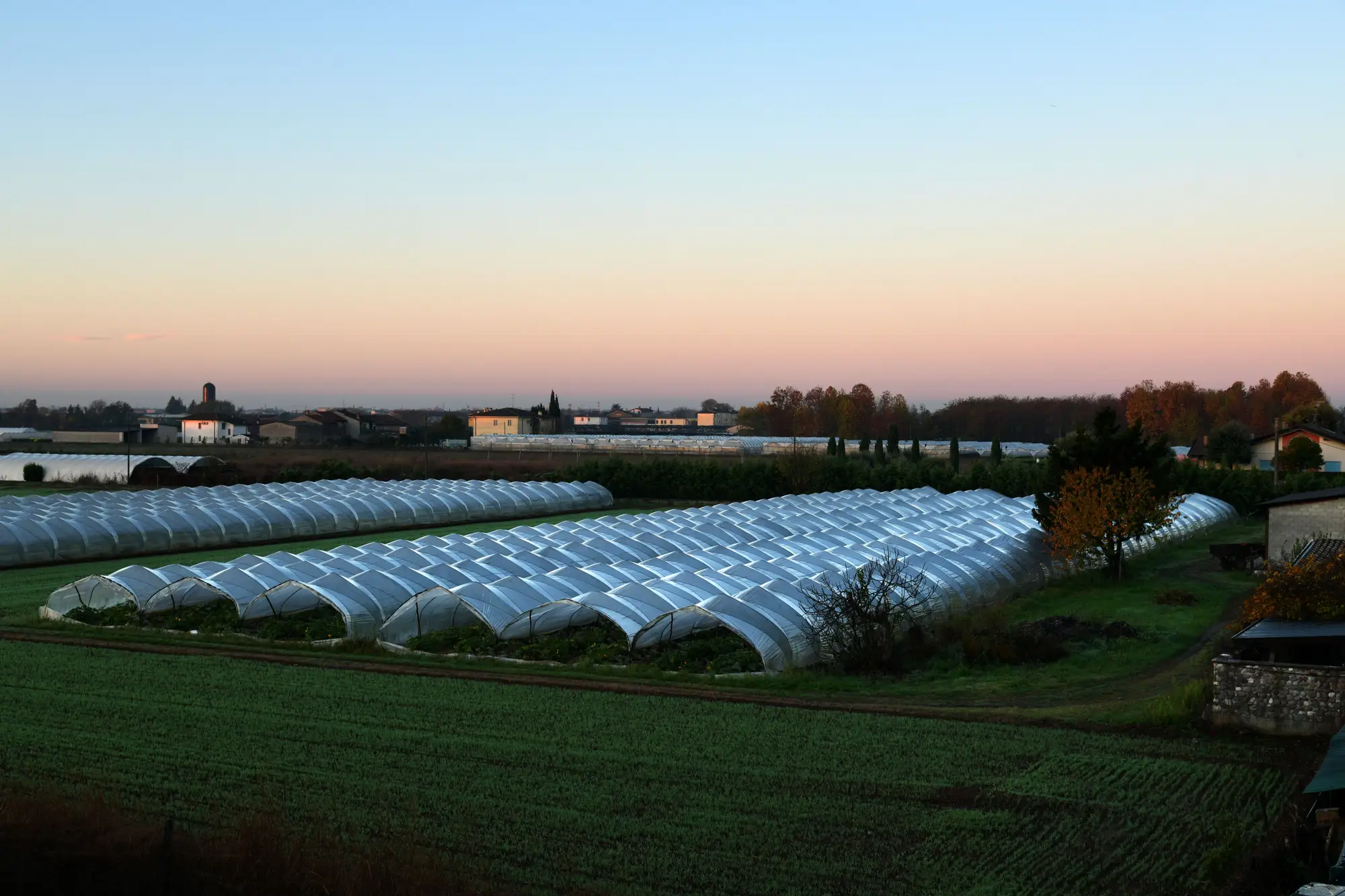
"Protected cropping" shows up on a lot of forms without anybody defining it the same way twice. For an adjuster it means one thing. For an input supplier pricing a territory it means another. For the grower standing in front of a bent hoop house after a hailstorm, it means whatever gets the claim paid.
The short answer: protected cropping is any production happening under a structure built to modify the growing climate, rather than just fencing it. Glasshouses, gutter-connect poly houses, single-span hoop houses, caterpillar tunnels, shade houses with retractable cloth. If the covering is doing work, holding heat, cutting wind, filtering light, it's protected cropping. A field with a deer fence around it isn't.
What protected cropping means
The term covers a wider range of builds than most people assume. On one end you've got a permanent glass range with poured footings, heating lines, and ridge vents, the kind of structure that shows up on a county assessor's roll as real property. On the other end you've got a caterpillar tunnel: bent conduit, poly film, ground stakes, moved three times a season. Both get called "protected cropping" in casual conversation. They don't get treated the same way on a policy.
What separates them for insurance purposes usually comes down to a few things: how it's anchored, what it's covered in, whether it has a permanent utility hookup, and whether it's built to last one season or ten years. A structure bolted to a concrete slab with glazing and a furnace reads as a fixed asset. A hoop house held down with earth anchors and re-skinned every two years reads closer to equipment, sometimes closer to a crop input than a building.
That distinction matters because it changes which schedule a structure falls under, what documentation an adjuster wants to see, and whether the covering material itself is insured separately from the frame. A grower who thinks of the whole thing as "my greenhouse" may find the insurer splitting it into structure, glazing, and contents, each with its own terms.
What makes a structure count as insurable
An "insurable structure" generally needs three things: a defined footprint, a covering that's attached rather than draped, and some evidence it's meant to stay put through at least a full production cycle. A shade cloth stretched over t-posts for August lettuce is a crop protection practice. The same cloth on a fixed steel frame with a concrete perimeter is a structure.
Size alone doesn't settle it. A small research high tunnel at a university ag station and a quarter-acre gutter-connect range both clear the bar if they're anchored, covered, and standing year to year. What trips people up is the in-between stock: converted shade houses, retractable-roof ranges, structures that were temporary and got left up for five seasons because nobody took them down. Those get reviewed case by case, and the frame age, the anchoring method, and whether there's permanent irrigation or heat infrastructure all factor into which side of the line it lands on.
For anyone pricing risk or planning input volume across a county or a growing region, this is the part that costs money: you can't tell from a windshield survey which poly houses are permanent stock and which ones came down in April. You need to see the footprint, the covering, and how the same parcel looked a year ago.
Why the paperwork matters more than the plastic
None of this is really about the plastic. It's about whether a structure shows up consistently enough, with a defined footprint and a covering that stays attached, to be treated as insurable square footage rather than a seasonal practice. A supplier sizing demand for poly film, shade cloth, or heating equipment across a region runs into the same line-drawing problem an adjuster does: counting structures one at a time, parcel by parcel, misses the ones that went up last winter and the ones that came down.
Greenhouse Mapping builds an annual inventory of protected-cropping structures across a region from satellite imagery, with each one sized and classified by type, so the count reflects what's standing now rather than what was there at the last site visit.
If you're sizing a territory rather than one claim, that annual structure-by-structure view is worth a look.