19 October 2026
Hoop house vs. greenhouse: what actually separates the two
Hoop house vs. greenhouse: frame, glazing, and climate-control differences, and why the split matters when sizing protected-cropping acreage.
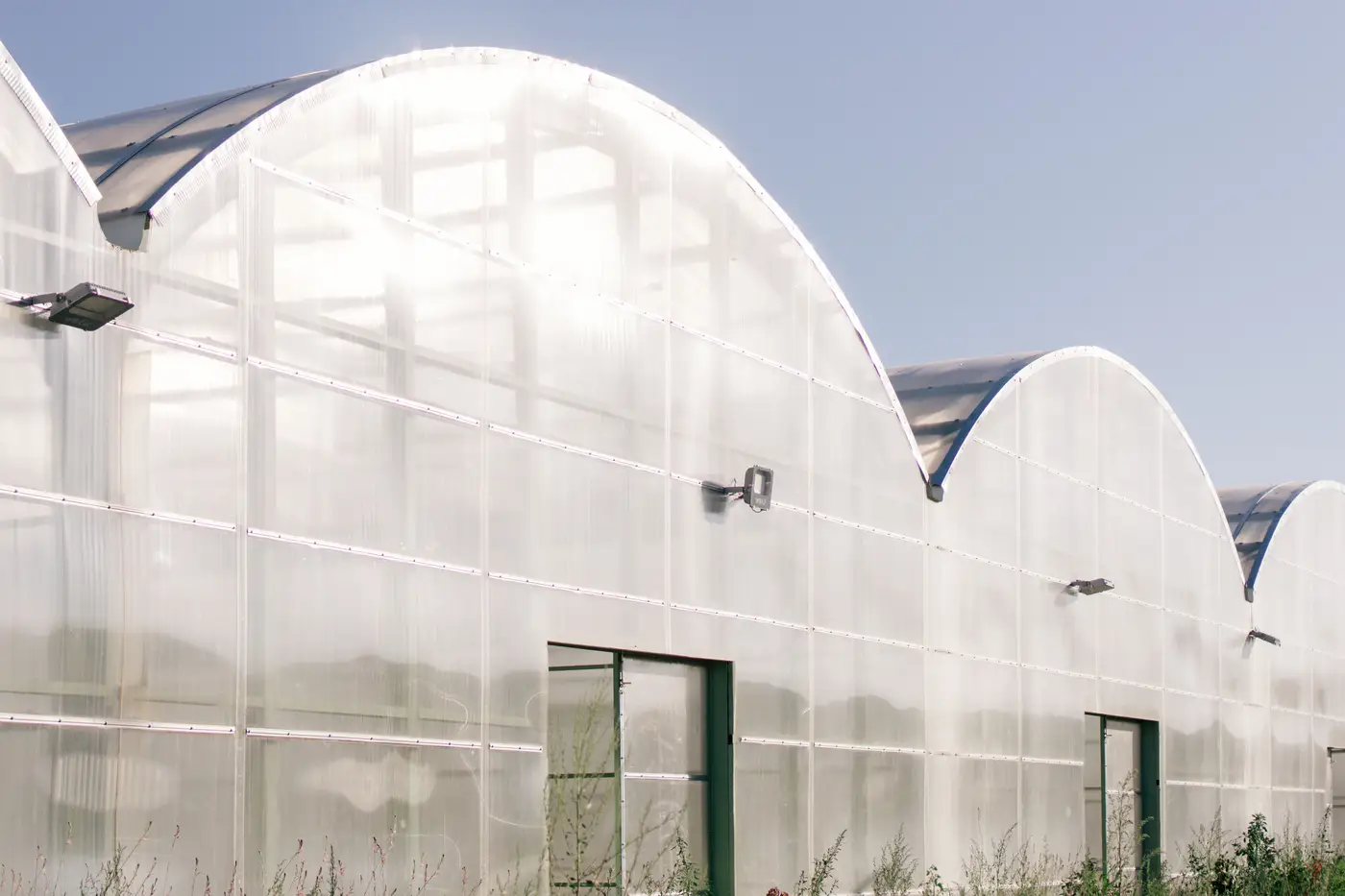
If you've driven past a field edge covered in white or clear plastic stretched over bent pipe, you've seen a hoop house. The term gets used loosely, sometimes as a stand-in for "greenhouse" in general conversation, but the two are built differently, cost differently, and show up differently when someone is trying to count structures across a county rather than one farm.
Hoop house definition
A hoop house, also called a high tunnel or Quonset-style tunnel, is a semicircular frame of bent metal tubing or PVC covered in a single layer of polyethylene film. There's usually no permanent foundation. No electrical system baked in. No automated venting or heating plant as standard equipment, though growers retrofit roll-up sides and sometimes a wood stove or propane heater. The structure traps solar heat and stretches a growing season at both ends, but it isn't built to hold a controlled climate year-round the way a production greenhouse is.
Hoop houses run cheap relative to their footprint, which is exactly why they've spread so fast on small and mid-size farms over the last fifteen years. A grower can put one up in a weekend with a crew of three. That ease of construction is also what makes them hard to track at a regional level: they go up and come down between seasons, and they rarely show up in permitting records the way a glass range or a gutter-connected poly house does.
Hoop house vs. greenhouse structure type
A greenhouse, in the stricter sense the term carries for anyone classifying protected-cropping structures, implies a rigid frame, typically steel or aluminum, with glazing in glass, rigid polycarbonate panels, or double-layer inflated poly. It's built on a foundation, wired for power, and usually fitted with mechanical ventilation, fans, and often supplemental heating or CO2 injection. Gutter-connected ranges, the kind that string together multiple bays under one roofline, fall into this category too, and they can run from a few thousand square feet to tens of acres under one operation.
So the practical distinction comes down to a handful of things:
- Frame: bent tube versus rigid steel or aluminum truss
- Glazing: single-layer poly film versus glass, rigid panel, or double poly
- Climate control: passive venting versus mechanical systems
- Permanence: seasonal or semi-permanent versus a fixed, foundationed structure
Quonset-style tunnels sit at the low end of that scale, and gutter-connected glass or poly ranges sit at the high end. There's a middle tier too, high tunnels with roll-up sides and supplemental heat that blur the line, which is part of why structure-type classification from imagery alone has to account for shape, shadow geometry, and glazing reflectance rather than relying on a single visual cue.
Why the distinction matters for sizing a region
For an input supplier building a sales territory, or a planner trying to understand how much protected-cropping acreage sits inside a district, lumping hoop houses and greenhouses together produces a number that's technically true and practically useless. A thousand acres of single-layer poly tunnels draws a very different fertigation, labor, and input profile than a thousand acres of climate-controlled glass. Fertilizer injection rates, heating fuel demand, and even the crop mix skew differently between the two categories.
Field survey can sort that out structure by structure, but it's slow and it misses the tunnels a grower put up in March and took down after the fall crop, which is a real share of hoop house inventory in a lot of growing regions. An annual structure inventory built from high-resolution satellite imagery, classified by footprint shape and glazing signature, catches that churn and tells you how much acreage is tunnel versus fixed range across an entire county or growing district in one pass. That's the kind of count Greenhouse Mapping was built to produce.
If you're trying to size protected-cropping territory and need the hoop house and greenhouse acreage broken out separately, that's worth a look.