14 October 2026
What is a parral greenhouse?
What a parral greenhouse is, how it differs from a multi-tunnel structure, and why the term is shorthand for Almería's plastic-covered plain.
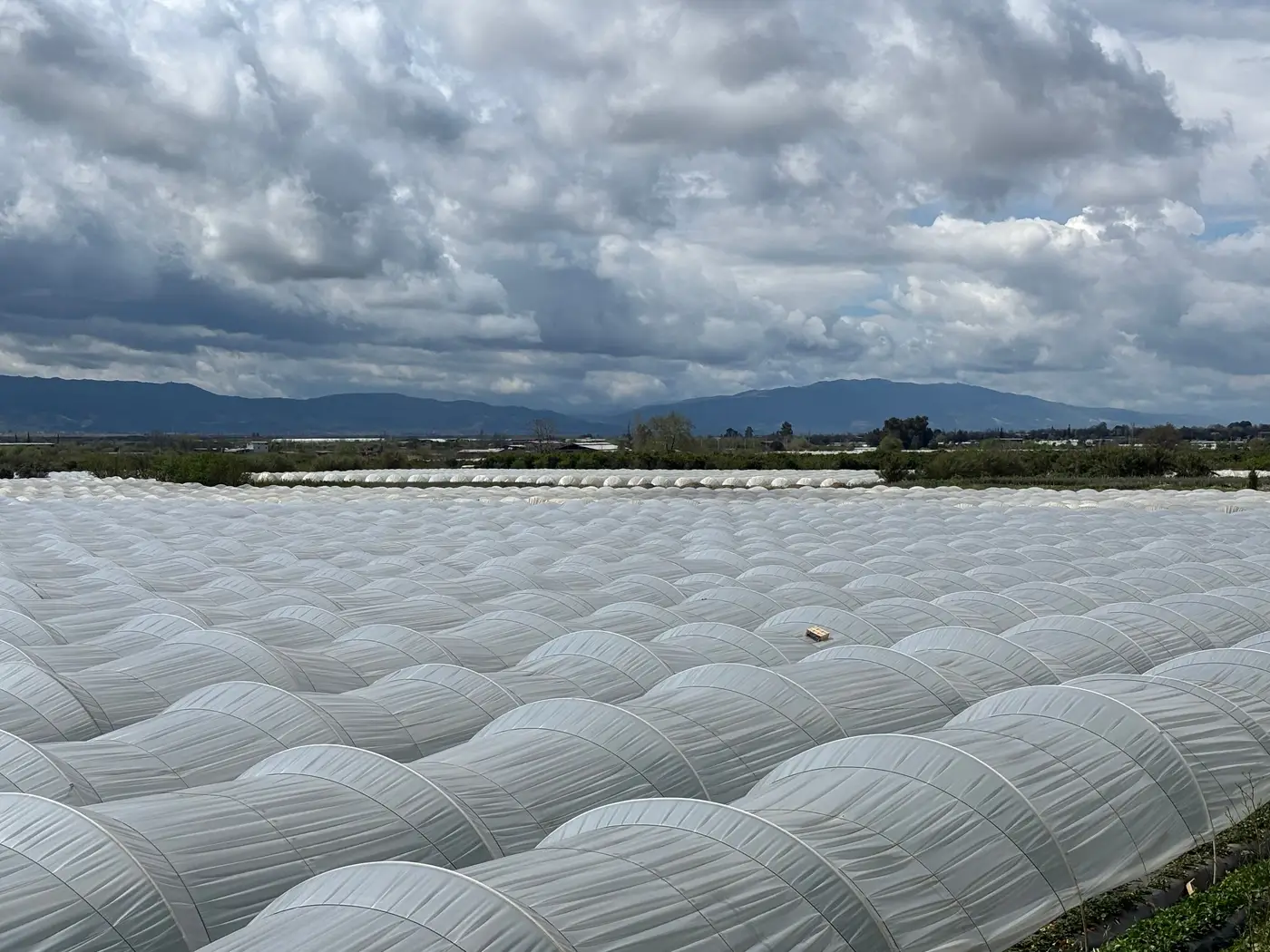
A parral greenhouse is the low-cost, flat-or-low-pitch structure that covers most of the "mar de plástico" around Almería and Murcia: wooden or galvanized steel posts set on a grid, a mesh of tensioned wire strung between them at roof height, and polyethylene film laid over the wire and tied down at the edges. The name comes from the vineyard trellis it borrowed its support logic from, parral meaning the overhead wire-and-post system Spanish growers already used to hold up grapevines. Someone looked at a vine trellis and figured it would hold plastic just as well as it held fruit, and the design stuck.
It's cheap to put up. A grower can get a hectare under cover without steel ribs, without a crane, and without the engineering a taller structure needs. That's the whole reason it spread across the Almería coastal plain the way it did: low capital cost per hectare, built mostly with local labor and materials, no need to import tunnel kits. Roof pitch is shallow, sometimes close to flat, and eave height stays low, usually under three meters. Ventilation comes from roll-up or sliding side panels and from cuts made directly into the roof plastic, not from ridge vents or fans.
How a parral differs from a multi-tunnel
A multi-tunnel, sometimes called multi-span or multicapilla, is built from curved steel tube ribs that form a row of arched vaults, each one sharing a gutter with the next. Eave height runs higher, the arched roof sheds rain and manages condensation better than a flat parral roof does, and the structure can carry wind and snow loads a parral frame isn't built for. Ventilation is usually better too, with continuous roof vents rather than hand-cut slits in the film.
The tradeoff is cost. Steel ribs, taller gutters, and heavier foundations push the price per hectare well above a parral build. That's why multi-tunnel shows up more in newer developments and in regions where wind or snow load actually matters, while parral keeps dominating the older, established footprint in Almería and neighboring provinces where growers already have the structures standing and the economics never justified a rebuild.
Film life differs too. Parral plastic typically gets replaced every few seasons as it degrades and loses light transmission, which means parral country generates a recurring film-replacement cycle that multi-tunnel, often covered in longer-life material, doesn't repeat at the same rate.
Why "Almería-style" and "parral" mean almost the same thing
When people in the trade say "Almería-style greenhouse," they're almost always describing a parral: the flat-roofed, wire-and-post structure that gives the province's plastic-covered plain its distinctive look from the air. The two terms aren't technically identical. Almería also has some multi-tunnel and a smaller share of glass, mostly newer builds and conversions. But parral is overwhelmingly the baseline structure type when anyone pictures the region, and the two phrases get used interchangeably often enough that it's worth knowing parral is the specific structure underneath the regional label.
For anyone sizing input demand or planning distribution across a protected-cropping region, the parral-versus-multi-tunnel distinction isn't academic. The two structure types carry different replacement cycles, different ventilation retrofits, different conversion economics if a grower is thinking about moving to glass or a taller multi-span frame. A region that's 80% parral behaves very differently as a market than one that's shifted toward multi-tunnel, even if the covered hectares look similar on paper.
Field survey can tell you that difference for a sample of farms. It can't tell you it for a province, because nobody's walking every plot in Almería with a tape measure. Greenhouse Mapping builds an annual structure inventory across whatever region you define, sized and classified by structure type from satellite imagery, so you can see how much of your territory is still parral, how much has moved to multi-tunnel, and how that mix is shifting year over year.
If you're trying to size a protected-cropping territory and want that breakdown for your own region, take a look at what Greenhouse Mapping covers.